
Cultural heritage · Viet Nam
Yen Tu-Vinh Nghiem-Con Son, Kiep Bac Complex of Monuments and Landscapes
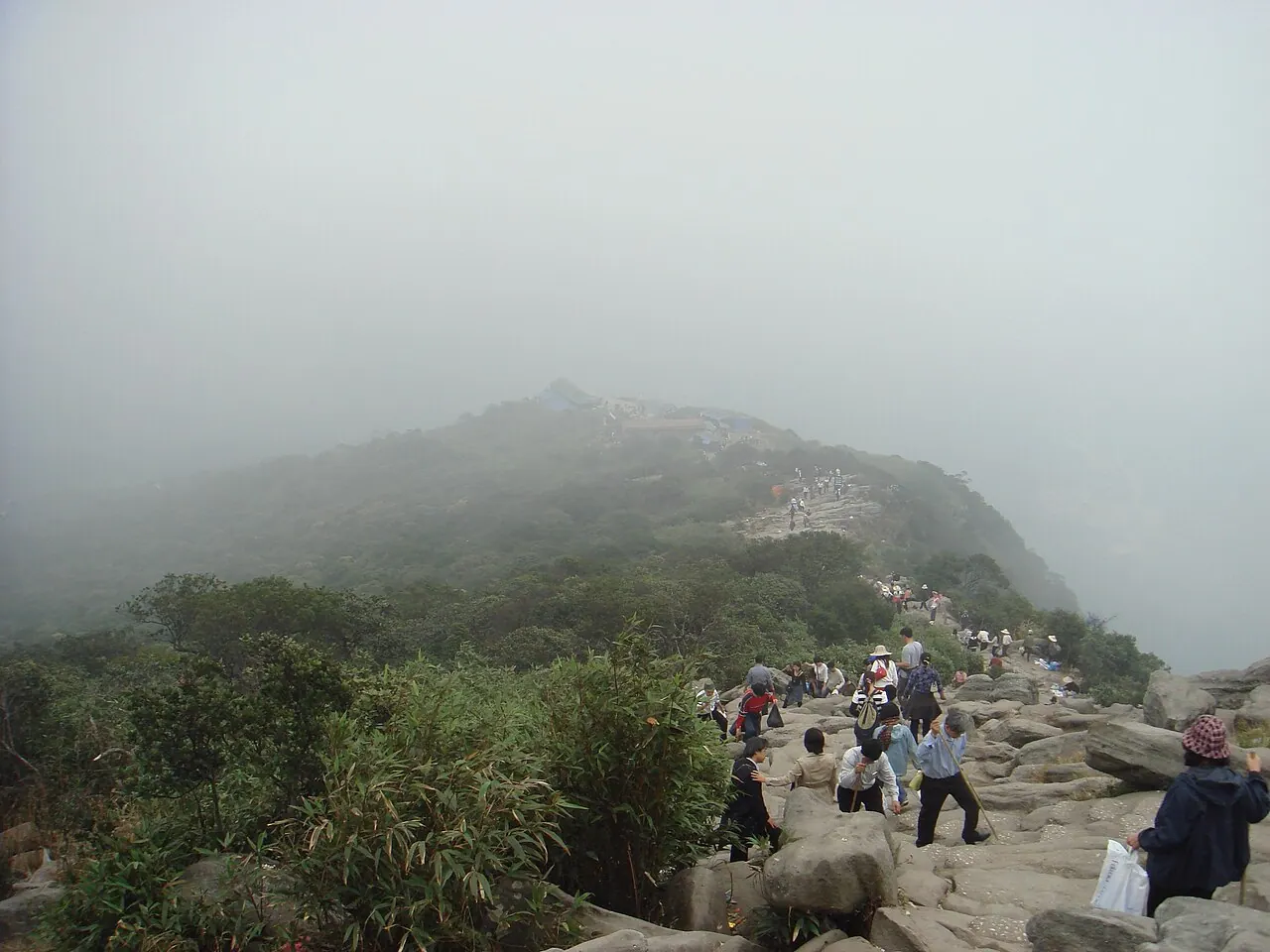
The property comprises 12 sites across forested mountains, lowlands, and river valleys. Centred on the Yen Tu Mountain Range, it was home to the Tran Dynasty during the 13th and 14th centuries and the birthplace of Truc Lam Buddhism, a uniquely Vietnamese Zen tradition that shaped the Dai Viet kingdom. The complex includes pagodas, temples, shrines, and archaeological remains tied to religious and historical figures. Strategically located in geologically favourable settings, it remains a vibrant pilgrimage destination.
Heritage at a glance
- First inscribed
- 2025
- UNESCO region
- Asia and the Pacific
- Selection criteria
- (iii)
- Property area (hectares)
- 525.748
Why this place matters
UNESCO’s assessment of its heritage significance, adapted in formatting from the source dataset.
Brief synthesis
The Zen sect of Truc Lam (Bamboo Forest) Buddhism was founded in the 13th century by Tran Kings, notably King-Buddha Tran Nhan Tong, and is rooted in the sacred mountain landscape of Yen Tu-Vinh Nghiem-Con Son, Kiep Bac Complex of Monuments and Landscapes. Truc Lam Buddhism represents a syncretic philosophical and spiritual system that harmonises Mahayana Buddhism with Confucian ethics, Taoist cosmology, and Vietnamese local beliefs, based on shared values of peace, reconciliation and harmony. Through its many temples, hermitages, pilgrimage routes, steles, woodblocks, and sacred sites, the serial property, which comprises twelve component parts, reflects all stages of Truc Lam Buddhism’s development, from its founding and institutionalisation to its revival and continuing transmission. These places, shaped by centuries of devotion, remain vibrant religious centres and pilgrimage destinations, affirming the living tradition’s spiritual and cultural relevance both in Viet Nam and across the diaspora.
The property epitomises the unique fusion of state, religion, and people, and presents an enduring sacred landscape shaped through sustainable interaction with nature, as demonstrated by the strategic and harmonious location of sites used for worship within favourable topographic and geological settings such as mountain ridges, valleys, rivers, and rock formations, where natural resources are readily available.
Criterion (iii):
Through its archaeological remains and various monuments, Yen Tu-Vinh Nghiem-Con Son, Kiep Bac Complex of Monuments and Landscapes provides exceptional testimony to the different stages of the development of Truc Lam Buddhism, a uniquely Vietnamese Zen tradition founded in the 13th century by Tran Kings, royal family, and leading monastic figures, notably King-Buddha Tran Nhan Tong. Integrating Mahayana Buddhism with Confucianism, Taoism, and local beliefs, Truc Lam Buddhism contributed to the spiritual foundation and the rise of an independent state, a resilient Vietnamese society and peace amidst global instability in the 13th century.
Criterion (vi):
Yen Tu-Vinh Nghiem-Con Son, Kiep Bac Complex of Monuments and Landscapes is directly associated with the founding and diffusion of Truc Lam Buddhism. The continual celebration of rituals, festivals, and pilgrimages to the sacred sites attest to the enduring relevance of the spiritual philosophy of self-discipline, living in harmony with nature, peace-loving, and benevolence. Truc Lam Buddhism especially encourages its followers to pursue “active engagement” in the lives of people and the affairs of the country. Many intangible aspects, including scriptures, stories, poems, folklore, and legends, as well as rare woodblocks imprinted with Chinese-Nom script are attesting to the ideology and influence of Truc Lam Buddhism.
Integrity
The twelve component parts of the property collectively express the full scope of the Truc Lam Buddhist tradition, from its founding at Yen Tu Mountain, evidenced through ancient temples and archaeological remains, to its institutionalisation at Vinh Nghiem temple and Con Son – Kiep Bac complex of monuments and landscape. The philosophical codification of Truc Lam Buddhism is further associated with inscriptions, relics, and ritual practices, and the property offers a full representation of the historical, spiritual, and geographical dimensions of Truc Lam Zen Buddhism, capturing its emergence, diffusion, and enduring relevance across time and space. The property maintains visual, functional, and associative integrity, reinforced by active religious use, traditional stewardship practices, and legally designated protection zones. The property should be further protected by preventing any sand mining and illegal coal mining in the upstream area of the buffer zones, and by addressing domestic wastewater and agricultural fertilizer run-off that is affecting rivers.
Consolidating a comprehensive archaeological map of the Yen Tu area will also serve as a basis for further research and conservation.
Authenticity
The Yen Tu Mountain range has been continuously venerated and protected for centuries as the spiritual heartland of Truc Lam Buddhism. This enduring reverence is expressed through both the physical preservation of religious monuments and the uninterrupted practice of rituals, festivals, and spiritual teachings across generations. Archaeological investigations, imperial annals, religious scriptures, epitaphs, maps, and inscriptions support the authenticity of the property. The significance of each component part is rooted in its original location, spiritual function, architectural form and sustained traditional use.
Most of the monuments were originally built for Buddhist worship, religious instruction, or to honour royal ancestors, national heroes, and historical events – functions that continue to this day, through community stewardship, and the enduring spiritual connection between people and landscape. Recent reconstructions of buildings and structures follow strict national conservation regulations and use traditional construction methods and materials, such as gritstone, sandstone, terracotta, and locally sourced timber. The restorations through time were necessary due to periods of conflict and natural degradation, yet they reflect an authentic continuation of Vietnamese architectural and spiritual heritage. A systematic conservation process, including enhanced restoration techniques, taking into account the need to maintain the authenticity of the buildings, archaeological sites, and other relevant elements, needs to be implemented.
Protection and management requirements
The property, which is owned by the State Party, is strictly protected under the provisions of the Law on Cultural Heritage No. 21/2001/QH10 dated 29 June 2001; Law No. 32/2009/QH12 dated 18 June 2009; and Governmental Decree No. 98/2010/ND-CP dated 21 September 2010. Governmental decisions specifying the areas and boundaries of protection zones and landscape protection areas; the Law on Environmental Protection (2020); the Law on Forestry (2017); and the Law on Tourism (2017) are also enforced. The component parts of the property are included within Special National Monuments, protected forests, national parks, and nature reserves that are strictly protected under national laws. Yen Tu-Vinh Nghiem-Con Son, Kiep Bac Complex of Monuments and Landscapes is governed under the jurisdiction of the People’s Committees of three provinces and managed overall by the Yen Tu Management Board, guided by a legally binding management plan.
There is a strong commitment to protection and financial support from the Government and provincial authorities. Adequate consultation and effective participation of local communities in the management of the property should be ensured. There are some potential threats to the property and buffer zone, none of which are of immediate or significant concern. The security and safety measures currently in place, especially for the woodblocks, will be improved.
In view of future increase in the number of visitors, the different activities and projections should be consolidated into a formal tourism management plan. The interpretation and presentation of the overall property in line with the core narrative on the development of Truc Lam Buddhism should be further developed.
Places within this listing
This is a serial property with 12 components in the imported record.
View the component places
- Bo Da Pagoda (1732-009)
- Con Son Pagoda (1732-008)
- Kiep Bac Temple (1732-002)
- Chua Lan Pagoda (1732-003)
- King Chu Cavern (1732-011)
- Thanh Mai Pagoda (1732-007)
- Nham Duong Pagoda (1732-010)
- Vinh Nghiem Pagoda (1732-006)
- Yen Giang Stake-yard (1732-012)
- Hoa Yen Pagoda relic cluster (1732-004)
- Thai Mieu (Imperial Ancestral Shrine) (1732-001)
- Ngoa Van Hermitage Pagoda relic cluster (1732-005)