
Natural heritage · United States of America
Okefenokee National Wildlife Refuge
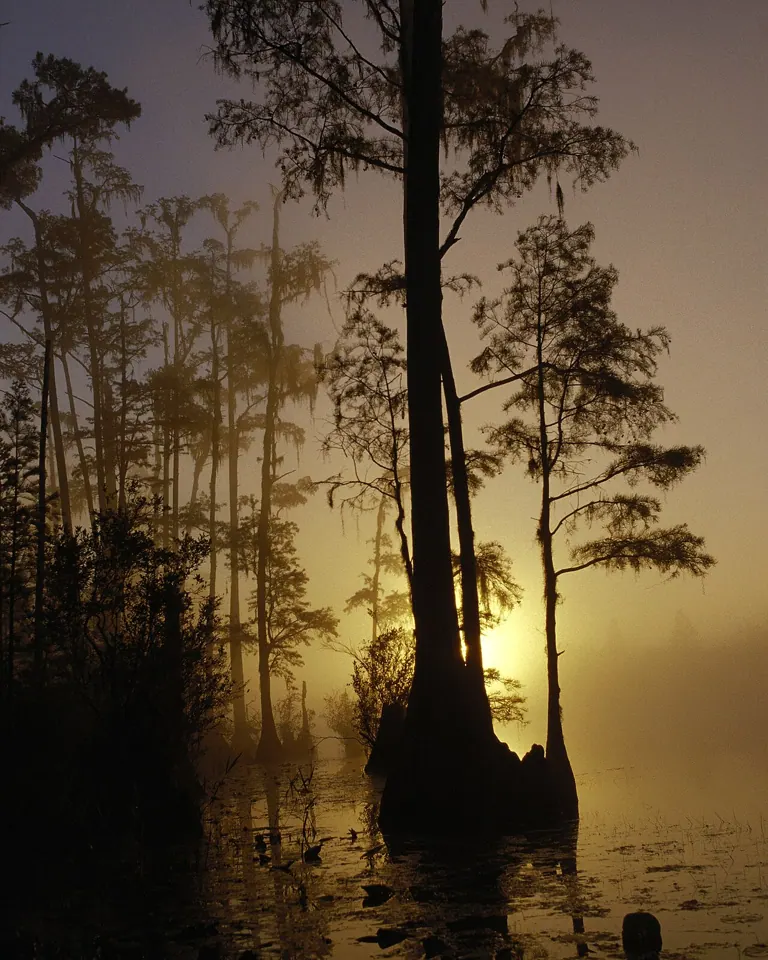
The property, located in southeastern Georgia and northeastern Florida, protects the Okefenokee Swamp, the largest lowland freshwater peatland in the subtropical zone worldwide and one of the largest and most intact ecosystems within the North American Coastal Plain global biodiversity hotspot. The property comprises a diverse mosaic of wetlands, savannas, and forests shaped by the ongoing interaction of water, fire, vegetation, and wildlife, with alternating fire and rainfall processes driving peat formation, vegetation structure, and biodiversity. The site also contains significant areas of endangered Longleaf Pine (Pinus palustris) savanna, of which less than 3% remains, supporting high concentrations of plant species endemic to the region. Its extensive peat deposits provide an important archive of palaeo-environmental history and critical carbon storage. The property supports exceptional biodiversity, including at least 856 plant species, 48 mammal species, 238 bird species, 39 fish species, and 90 reptile and amphibian species, and provides important habitat for migratory birds, threatened species, and a significant population of American alligators.
Heritage at a glance
- First inscribed
- 2026
- UNESCO region
- Europe and North America
- Selection criteria
- (ix)(x)
- Property area (hectares)
- 164,565.5
Why this place matters
UNESCO’s assessment of its heritage significance, adapted in formatting from the source dataset.
Brief synthesis
Located primarily in the southeast of the State of Georgia and the northeast of the State of Florida, the Okefenokee National Wildlife Refuge (ONWR) protects the spectacular Okefenokee Swamp, a vast and globally unique subtropical peatland. The ONWR is situated in an area of great historical, cultural, and spiritual significance for the Muscogee (Creek) Nation, among other Indigenous Peoples, who inhabited the area before colonization and their forced removal. The Okefenokee Swamp is considered the largest lowland freshwater peatland in the subtropical zone worldwide and is one of the largest and most intact remaining ecosystems within the North American Coastal Plain (NACP) global biodiversity hotspot. The interplay between the pine savannas and wetlands of the Okefenokee Swamp weaves together exceptional hydrologic, pyrogenic, and vegetation processes with complex faunal interactions.
The ONWR also protects significant areas of Longleaf Pine (Pinus palustris) savanna, an endangered ecosystem found only in the southeastern United States of America, and of which less than 3% remains. The extensive and intact peat layers in the ONWR also provide an irreplaceable archive of local, regional and global palaeo-environmental history, as well as critical carbon storage.
Criterion (ix):
The ONWR encompasses a highly diverse mosaic of wetlands, savannas, and forest ecosystems characterized by exceptional and ongoing interactions between water, fire, flora, and fauna. The cycle of alternating fire and rainfall processes drive peat formation, shape vegetation structure, and support high levels of biodiversity. It is one of the largest wetland complexes in North America, and is likely the world’s largest and most intact lowland freshwater (primarily precipitation-fed) peatland in the subtropical zone. The property hosts a significant portion (approximately 11,200 hectares) of Longleaf Pine (Pinus palustris) savanna, found only in the southeastern United States of America, and of which only approximately 3% remains.
These pine savannas form a complete ecosystem and support a high concentration of plant species endemic to the NACP.
Criterion (x):
The unique ecosystem dynamics and location of the ONWR contribute to its high biodiversity values and is representativeness of the North American Coastal Plain (NACP) global biodiversity hotspot, including high percentages of regionally endemic species. The ONWR is home to at least 856 species of plants, 48 species of mammals, 238 species of birds, 39 species of fish, 90 species of reptiles and amphibians, and a large number of invertebrates. The herpetofauna of the ONWR is particularly high for a temperate or subtropical ecosystem, and includes an important population of American alligators, which act as the keystone predator and landscape architect. The property is an important refuge and breeding ground for migratory birds.
The ONWR acts as a refuge for many threatened species, primarily tree species, reptiles, and birds.
Integrity
The ONWR is of adequate size to ensure the complete representation of its key values and ecological processes, including the interaction of fire and hydrology, which are critical to maintaining the property’s exceptional values. Its size, relative inaccessibility, and long-standing protection under the National Wilderness Preservation System, provides the property with very high degree of ecological integrity. While the ONWR suffered adverse effects from unsuccessful drainage attempts and logging operations predating the establishment of the ONWR, these impacts were followed by nearly a century of natural recovery and active restoration, with minimal current impacts. While the property does not have a formal buffer zone, a functional combination of measures in the immediate surroundings, including the presence of neighbouring protected areas, collaborative efforts to create a fire-resistant buffer area surrounding the ONWR, and continued land acquisition along the ONWR’s border in partnership with non-profit organizations, supports its conservation objectives.
The main threats to the property include impacts of climate change on the presence and severity of fires and changes in the hydrological regime, and industrial and development pressures from outside the ONWR, particularly, mining interests, water management from commercial forestry, and diverse impacts from urbanization in the broader area.
Protection and management requirements
The ONWR was established in 1937 by Executive Order, and 87% of it was classified as a National Wilderness Area in 1974 under the Wilderness Act by Congress and designated as part of the National Wilderness Preservation System, thus providing for strict protection. The ONWR is managed by the United States Fish and Wildlife Service (USFWS), in partnership with private enterprises that provide visitor services. Management is guided by a 15-year Comprehensive Conservation Plan (CCP) to maintain its ecological integrity and manage visitation, with an update expected at the time of inscription. The property is effectively protected through robust federal legislation at the time of nomination, including the National Environmental Policy Act (1970), Endangered Species Act (1973), Fish and Wildlife Act (1959), Clean Water Act (1977), Archaeological Resources Protection Act (1979), and Executive Order 13007 Indian Sacred Sites (1996), among others.
Any reforms to the applicable legislation and the CCP need to ensure adequate protection for the attributes sustaining the Outstanding Universal Value of the property. With the ONWR being of great historical, cultural, and spiritual significance for the Muscogee (Creek) Nation, among other Indigenous Peoples, collaboration has grown between the ONWR management authorities and the Muscogee (Creek) Nation in the years leading up to the nomination. The Muscogee (Creek) Nation has identified 74 ancestral burial mounds within the ONWR and aim to have the area declared Traditional Cultural Property under the National Historic Preservation Act of 1966. The Muscogee (Creek) Nation considers it indispensable that cultural heritage values of the ONWR be recognized and appropriately protected alongside its natural values.
It is thus important to reflect these values in the management framework of the property. The collection, storage, and disclosure of specific information and locations of sacred sites within the ONWR should be treated with sensitivity and led by the Indigenous Peoples concerned.