
Cultural heritage · Greece
Minoan Palatial Centres
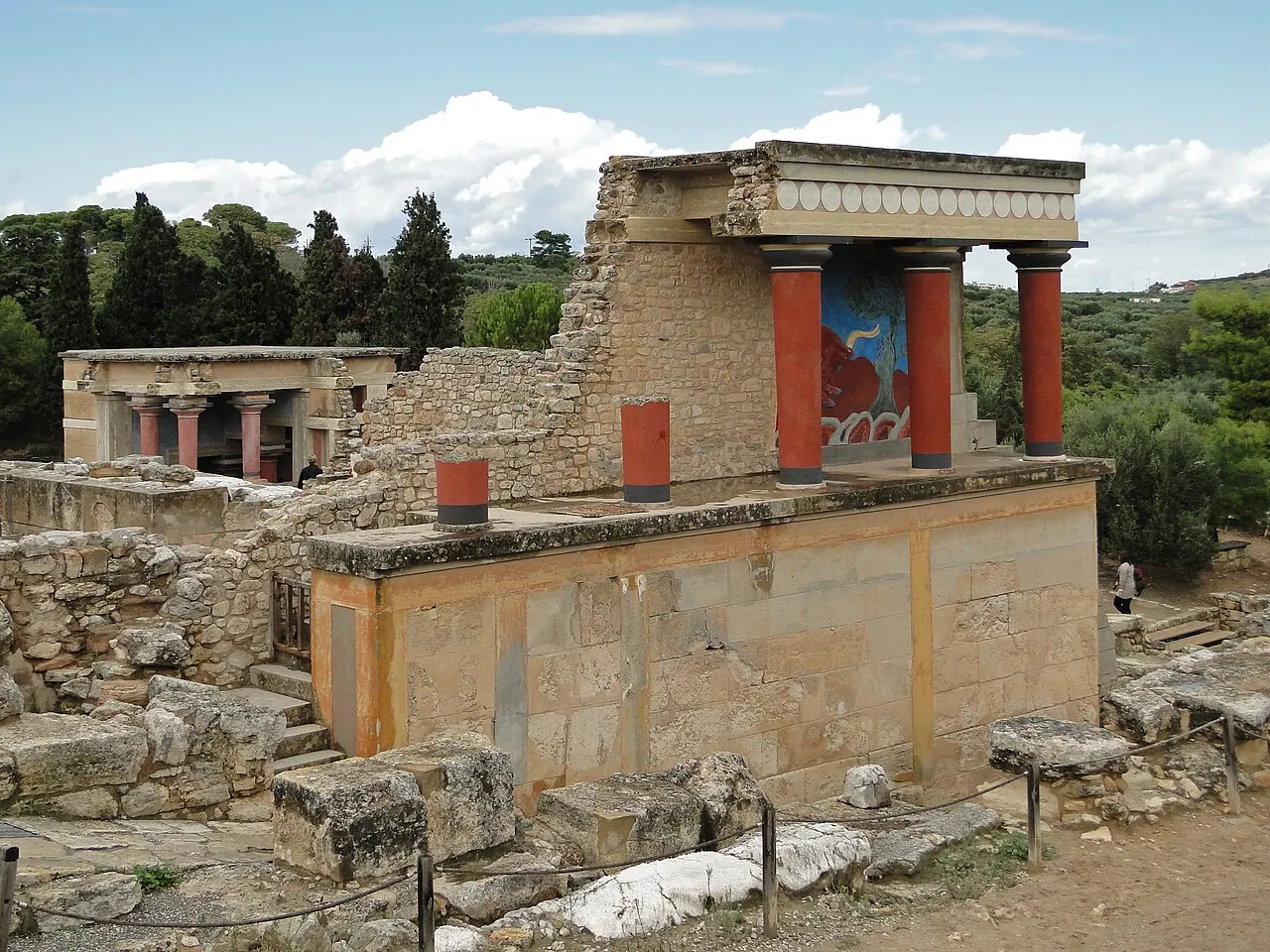
This serial property comprises six archaeological sites on Crete dating from 1900 to 1100 BCE. These sites represent the Minoan civilization, a major prehistoric Mediterranean culture. The palatial centres served as administrative, economic, and religious hubs, featuring advanced architecture, urban planning, and vibrant frescoes. They reveal early writing systems, maritime networks, and cultural exchanges. The property highlights the complexity of the Minoans’ social structure and their enduring influence on Mediterranean history.
Heritage at a glance
- First inscribed
- 2025
- UNESCO region
- Europe and North America
- Selection criteria
- (ii)(iii)(iv)
- Property area (hectares)
- 29.512
Why this place matters
UNESCO’s assessment of its heritage significance, adapted in formatting from the source dataset.
Brief synthesis
Minoan Palatial Centres consists of six archaeological sites (Knossos, Phaistos, Malia, Zakros, Zominthos and Kydonia) located on the island of Crete. Dating from 1900 BCE to 1100 BCE, they constitute the most representative expression of the Minoan Civilisation, which flourished in the Eastern Mediterranean over the course of two millennia (2800-1100 BCE), characterised by advanced social organisation, architectural ingenuity, and significant artistic achievements. The strategic position of Crete enabled it to serve as a cultural and economic bridge between Europe, Africa, and Asia, fostering innovation and trade. The Minoans, centred on Crete, emerged as a dominant maritime civilisation while developing a distinctive cultural identity.
The property highlights the zenith of their civilisation, covering all key aspects and phases of its development. Distributed across Crete, the palatial centres were central to Minoan society, functioning as administrative, economic, religious, and cultural hubs. The monumental architecture carefully adapted to the counters and characteristics of the natural landscape, with intricate internal organisation, advanced urban planning, and cultural innovations reflect a complex society. The sophistication of the Minoan architecture, the material evidence of early writing systems and of maritime networks and interactions of the Minoans with other Mediterranean cultures, as well as their mythological legacy, all have had a long-lasting cultural and intellectual influence on art and culture that continues to this day.
Criterion (ii):
Minoan Palatial Centres provides evidence of the important position of Minoan Crete as a central hub for Mediterranean cultural interactions during the Bronze Age, the palatial centres playing a key role in transmitting artistic, technological, and administrative practices, as well as being central in facilitating trade, artistic influence, and technological diffusion across the Eastern Mediterranean.
Criterion (iii):
Minoan Palatial Centres provides an exceptional testimony to one of the first advanced civilisations in Europe, the Minoan Civilisation, which has now disappeared. The six component parts encapsulate the key features of this Bronze Age culture, reflecting architectural innovations, religious practices, and artistic and cultural achievements of the Minoans, including the Cretan Hieroglyphic and Linear A, the two earliest writing systems in Europe, as well as Linear B script. Moreover, the palatial centres offer unparalleled insights into the Minoan social organisation, their complex administrative system, urban development, and economic activities, including trade with Egyptian and Mycenaean civilisations.
Criterion (iv):
Minoan Palatial Centres includes outstanding examples of Bronze Age architecture that denote advanced social, political, and administrative organisation of the Minoan Civilisation. The labyrinthine planning, courtyards, storage systems, and sophisticated hydraulic installations in the palatial centres highlight innovative architectural solutions and functional integration of royal, administrative, and religious functions. These features, combined with distinct urban planning and construction techniques, illustrate the emergence of state-like organisation in the Eastern Mediterranean and thus reflect a significant stage in human history.
Criterion (vi):
The legacy of the Minoan Civilisation, in the form of its myths, arts, and social ideas, has shaped artistic and intellectual thought through the ages and continues to inspire creative fields today. The legend of the Minotaur and the Labyrinth is directly associated with the palatial centres, attesting to their constructional complexity and monumentality.
Integrity
The overall integrity of each component part and of the serial property as a whole is strong; with the full extent of the archaeological site of Kydonia, located in urban Chania, not yet determined. The conservation efforts are focused on preserving the archaeological remains with no harmful developments affecting the sites. The monitoring system consists of a comprehensive framework aimed at ensuring the continued protection of the attributes that support the Outstanding Universal Value of the property. Its key indicators remain to be fully implemented in order for the monitoring system to be enhanced.
Authenticity
Most of the component parts of the property retain their original forms, designs, and materials, on account of the minimal intervention approach applied in their conservation, thus providing visitors with an authentic experience of the Minoan architecture. Knossos, though it faces challenges due to the extensive reconstructions carried out in the early 20th century, still holds considerable historical and educational value. Despite the compromises in form and design, large portions of the site remain authentic, and the preservation of materials and substance further contributes to its authenticity. All reconstructions are well documented.
Methods for clearly distinguishing between authentic archaeological remains and later reconstructions will be further developed to ensure that the justification for the Outstanding Universal Value of the property is based on authentic material. The agrarian settings of the sites remain largely undisturbed, maintaining a strong link to the historic contexts of the palatial centres.
Protection and management requirements
The property is protected under Law 4858/2021 “Sanction of the Code of Legislation for the Protection of Antiquities and Cultural Heritage in general” and falls under the jurisdiction of the Ministry of Culture. Special protection zones are designated for all component parts providing a high level of legal protection. Environmental and urban planning tools and regulations pertaining to building or other development activities near archaeological sites further support the protection of the wider setting of the component parts. The management system, coordinated by the Ministry of Culture, uses a collaborative approach in which other government, regional and municipal authorities, as well as local communities are involved, ensuring effective preservation of the property.
The management plan has been prepared in consultation with varied stakeholders. Its provisions regarding the tourism strategy for the interpretation and presentation of each one of the component parts and the serial property as a whole will be operationalised.
Places within this listing
This is a serial property with 6 components in the imported record.
View the component places
- Malia (1733-003)
- Zakros (1733-004)
- Knossos (1733-001)
- Kydonia (1733-006)
- Phaistos (1733-002)
- Zominthos (1733-005)