
Cultural heritage · Italy
Funerary Tradition in the Prehistory of Sardinia – The domus de janas
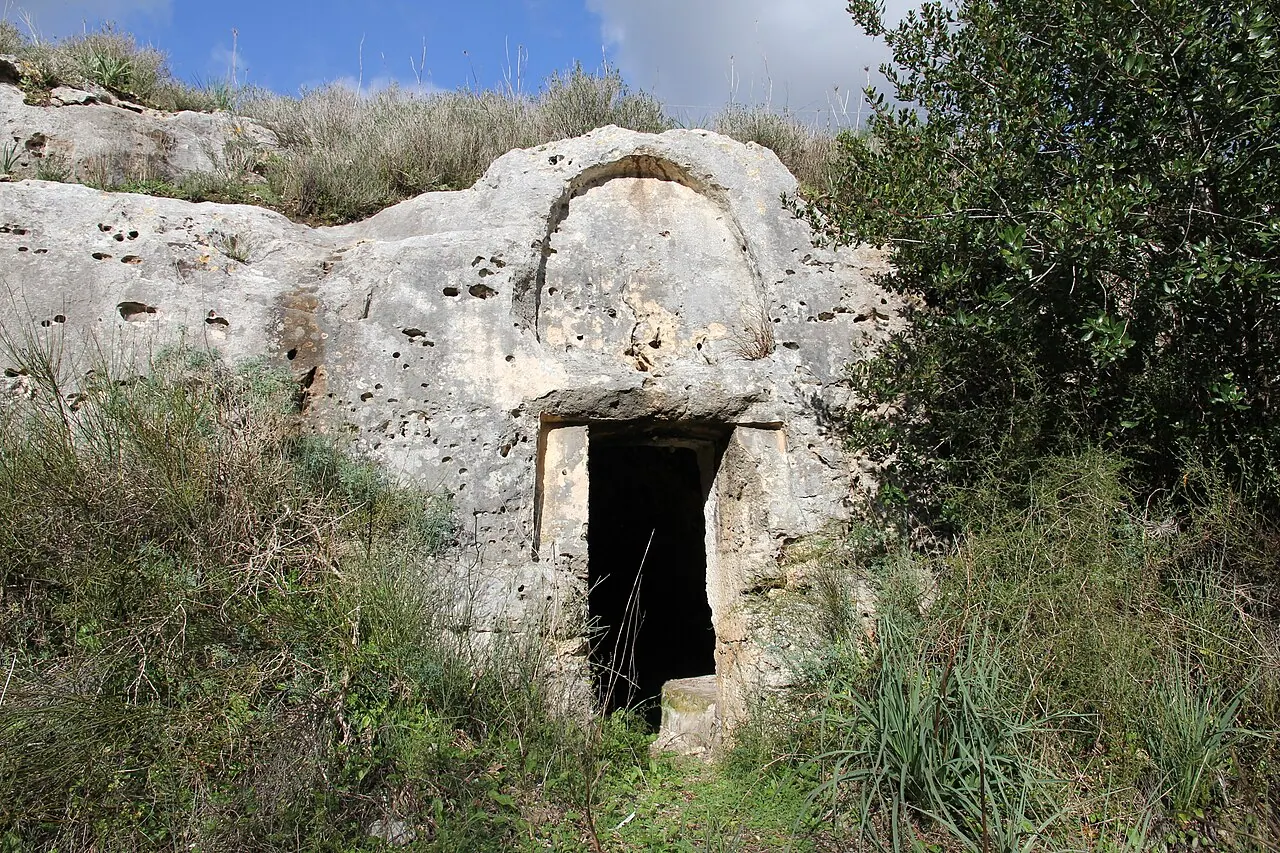
This serial property is an ensemble of hypogean burials and necropolises located in Sardinia, created between the 5th and 3rd millennia BCE. These sites reflect the daily life and funerary practices of prehistoric Sardinian communities. The domus de janas, locally known as “fairy houses,” are rock-cut tombs that reflect the funerary practices, spiritual beliefs, and social evolution of Sardinia’s prehistoric communities. These structures feature complex layouts, symbolic decorations, and figurative motifs that testify to the transformation of the relationship between the living and the dead in a society transitioning toward more complex forms of social organization. They represent the most extensive and rich manifestation of hypogean funerary architecture in the western Mediterranean, exemplifying a phenomenon attested by approximately 3,500 hypogea spread across the entire island.
Heritage at a glance
- First inscribed
- 2025
- UNESCO region
- Europe and North America
- Selection criteria
- (iii)
- Property area (hectares)
- 155.56
Why this place matters
UNESCO’s assessment of its heritage significance, adapted in formatting from the source dataset.
Brief synthesis
Funerary Tradition in the Prehistory of Sardinia – The domus de janas comprises a group of hypogeal funerary structures (chamber tombs) located in Sardinia and dating from the 5th to the 3rd millennia BCE. Known as domus de janas, or “houses of the fairies”, these rock-cut tombs, designed to mimic the appearance of the houses of the living, provide insights into the funerary practices and spiritual beliefs of Sardinian prehistoric communities. Used over long periods of time, the structures feature complex layouts and rich symbolic decoration that includes also figurative motifs, testifying to the social evolution in Sardinia, marked by the transformation of the relationship between the living and the dead in a society transitioning toward more complex forms of social organisation. The hypogeal necropolises were often situated close to settlements.
The eighteen component parts that constitute this serial property represent an extensive and rich manifestation of hypogeal funerary architecture, exemplifying a phenomenon attested in Sardinia by approximately 3,500 domus de janas spread across the entire island, which constitutes the largest corpus of this particular type of funerary structure in the Mediterranean Basin and Europe developed during the Late Prehistory. The sculpted, painted and engraved motifs found in many of the tombs show striking similarities with artistic expressions present in other major prehistoric art sites of the Neolithic and Copper Age in Europe, which testifies to the interactions between the Sardinian population and the communities of the Euro-Mediterranean basin.
Criterion (iii):
Funerary Tradition in the Prehistory of Sardinia – The domus de janas represents an exceptional testimony to a distinctive funerary tradition, related to the beliefs about the afterlife and the cult of the dead, developed by Sardinian prehistoric communities between the 5th and the 3rd millennium BCE, and which disappeared with the arrival of the Nuragic civilisation to the island in the 17th century BCE. Showcasing a complete set of structural types, planimetric evolution, and extremely rich decorative art, the domus de janas included in the property document the burial customs and spiritual conceptions of the afterlife of the island’s earliest settled communities, and provide valuable insights into the societal transformations in Sardinia up to the beginning of the Bronze Age.
Integrity
The series of domus de janas that constitute the property is a well-preserved representative sample of this particular type of hypogeal structure, which gives a full account of the specific cultural funerary phenomenon developed in Sardinia from the Neolithic to the early Bronze Age. Reflecting varied aspects of the funerary practices of the Sardinian prehistoric communities during that period, they also attest to their architectural changes through time. Despite statistical figures revealing issues related to the condition of the component parts, the stable nature of their materials and the fact that they have survived for millennia mean that no urgent measures have been identified for immediate implementation. The natural processes of deterioration at the level of individual component parts are under control.
Development of small-scale monitoring systems tailored to the selected component parts, with monitoring indicators designed for assessing the conditions of the sites, as well as development trends and rates of affecting factors will enhance their conservation.
Authenticity
The authenticity of the property is demonstrated through the designs, materials, and construction techniques reflected by the selected series of the domus de janas. While the archaeological sites have in general preserved their original features, throughout the millennia some historical modifications of the chamber tombs, related sometimes to the repurposing of the spaces, have occurred. Scientific studies and diverse sources of information, both written and visual (surveys, photographs and drawings), testify to the authenticity of the individual component parts of the serial property and their attributes. Recent conservation interventions have adhered to scientific standards and respected the material integrity of the sites, thereby ensuring the authenticity of the tombs as direct and tangible evidence of Sardinia’s prehistoric culture.
Protection and management requirements
All eighteen component parts of the serial property are protected at the national level as archaeological heritage under the Code of Cultural Heritage and Landscape (Legislative decree 42/2004). Regional and Municipal Urban Plans complement the legislative protection. The area of the property is under the control of two Superintendencies, peripheral offices of the Ministry of Culture, one for the provinces of Sassari and Nuoro and the other one for the provinces of Cagliari Oristano and Sud Sardegna. The current management system is a network of stakeholders coordinated by the Centro Studi Identità e Memoria in collaboration with the network of Municipalities.
A Management Plan that was developed and approved for the property includes a plan of action based on short-, medium- and long-term objectives. It also stipulates the creation of a governance system which is being consolidated through the establishment of a Participatory Foundation that will operate as the entity responsible for the coordinated and unified management of the serial site. The Foundation is being set up jointly by the Sardinia Region, the local Administration, the Superintendencies of the Ministry of Culture and the Centro Studi Identità e Memoria; it will operate with the scientific support of the two Universities based in Cagliari and Sassari. A comprehensive tourism management plan, including an interpretation strategy, is going to be developed by the Foundation.
Places within this listing
This is a serial property with 18 components in the imported record.
View the component places
- Petroglyph Park-a (1730-008)
- Petroglyph Park-b (1730-009)
- Necropolis of Brodu (1730-015)
- Necropolis of Mandras (1730-014)
- Necropolis of Montessu (1730-018)
- Necropolis of Istevéne (1730-016)
- Necropolis of Ispiluncas (1730-013)
- Necropolis of Anghelu Ruju (1730-001)
- Necropolis of Puttu Codinu (1730-002)
- Necropolis of Sa Pala Larga (1730-011)
- Necropolis of Sos Furrighesos (1730-012)
- Necropolis of Mesu ‘e Montes (1730-004)
- Necropolis of Sant'Andrea Priu (1730-010)
- Necropolis of Su Crucifissu Mannu (1730-005)
- Necropolis of Monte Siseri/S'Incantu (1730-003)
- Archaeological Park of Pranu Mutteddu (1730-017)
- Domus de janas of Roccia dell’Elefante (1730-007)
- Domus de janas of Orto del Beneficio Parrocchiale (1730-006)