
Cultural heritage · Malaysia
Forest Research Institute Malaysia Forest Park Selangor
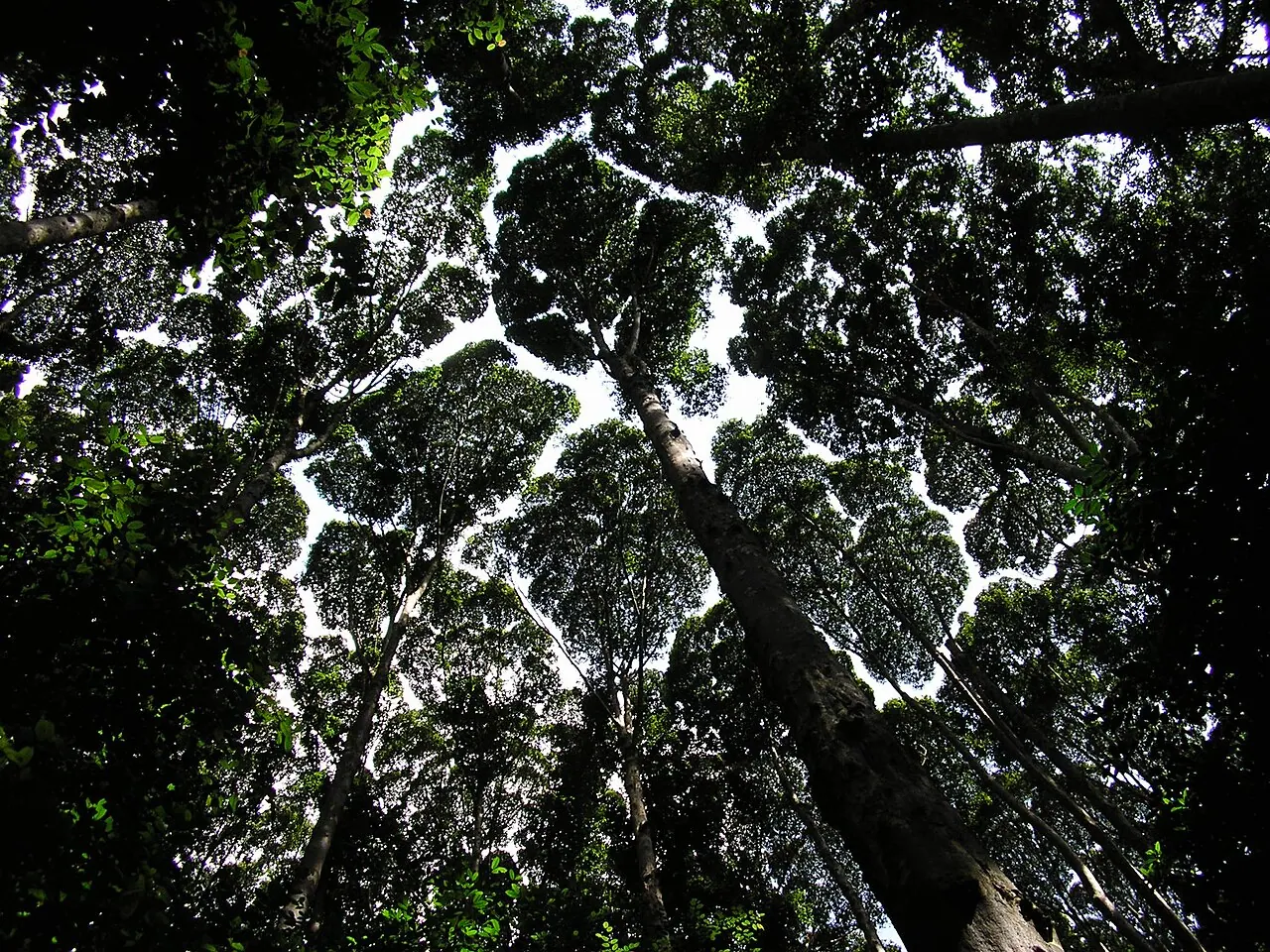
Located 16 km northwest of Kuala Lumpur, the property is a human-made tropical rainforest established on degraded tin-mining land from the 1920s. It includes scientific, residential, and service buildings, water bodies, and trails. The site represents a pioneering reforestation effort, successfully transforming barren land into a mature lowland tropical forest, showcasing early ecological restoration and sustainable land rehabilitation practices.
Heritage at a glance
- First inscribed
- 2025
- UNESCO region
- Asia and the Pacific
- Selection criteria
- (iv)
- Property area (hectares)
- 589
Why this place matters
UNESCO’s assessment of its heritage significance, adapted in formatting from the source dataset.
Brief synthesis
Located on the outskirts of Kuala Lumpur, the Forest Research Institute Malaysia Forest Park Selangor is one of the earliest large-scale re-creation of a human-made tropical rainforest, planted on land devastated by tin mining in the 1920s, marking a significant stage in human history, from deforestation to reforestation; the outcome of decades of efforts carried out by a team of foreign, local scientists and labourers. The property contains a hundred-year-old human-made tropical rainforest, arboreta, a botanical garden, experimental plots, forest trails, and an infrastructure of roads, avenues, water bodies, and heritage buildings. Within this high-biodiversity, multi-storied forest lies the Forest Research Institute of Malaysia (FRIM), which manages and protects this property. This restoration effort to recreate a biodiverse tropical rainforest began in the early 20th century, when deforestation to allow exploitation of land or mineral resources was a global phenomenon.
This shift from deforestation to reforestation marked an important stage in the history of forest science, a precursor to the worldwide awareness of planetary health.
Criterion (iv):
Forest Research Institute Malaysia Forest Park Selangor is an outstanding example of a designed forested landscape, historically and tangibly testifying to the efforts of large-scale environmental rehabilitation at the beginning of the 20th century. It remarkably illustrates a period in human history when scientific methods were applied to remedy the devastating impacts of mining, when ecological concerns were beginning to emerge. This effort marks an important scientific stage in forestry where the Forest Research Institute Malaysia Forest Park Selangor represents an early successful tropical large-scale scientific transformation from a severe deforestation stage to a mature biodiversity-rich forest restoration stage in 100 years.
Integrity
Forest Research Institute Malaysia Forest Park Selangor is of adequate size to sustain its Outstanding Universal Value and the stability of its structure, ecology and biodiversity composition, achieved in the 1980s, has not deviated from the form and design of a natural tropical rain forest, thus supporting its integrity and resistance to invasive species and any other disturbances. After a hundred years, the diversity of flora and fauna is equivalent to that of natural tropical rain forests of Malaysia. The size of the property is sufficient to minimize the intrusion of detrimental effects from its edges. The property itself, a designed forested landscape comprising a mature forest, and an infrastructure of roads, avenues, water bodies and buildings as entities within the forested landscape are all intact and have been maintained to preserve the original ambience of the property.
Its ecological stability indicates that its integrity and attributes have not been compromised to date. However, proposed changes in use within the Bukit Lagong Forest Reserve, located north of the property and contributing to the property’s ecological processes, may make the property’s integrity vulnerable. Therefore, close monitoring and stringent conservation and management measures should extend to Bukit Lagong Forest Reserve. Together with withholding the concessions for opening additional quarries in the latter, these measures may ensure the maintenance of the property’s integrity.
Authenticity
The property’s authenticity has not been compromised and demonstrates the sustainability of the property. The characteristic form and design of the Forest Research Institute Malaysia Forest Park Selangor is that of a forested landscape that was successfully created on devastated land and has remained intact until today. The property’s mission to create a human-made forest has continued from its beginning, a hundred years ago, without interruption and has now reached a level of maturity equivalent to that of a natural tropical rain forest. Forest Research Institute Malaysia (FRIM)’s core business of forest research has continued, and it is currently the body that is monitoring forest health in the property.
As a result of its scientific mission, FRIM has a full complement of scientists and engineers available to conserve and support the property, and a very long list of scientific publications, important for tropical rainforest.
Protection and management requirements
The property is wholly owned and managed by Forest Research Institute Malaysia (FRIM), a government agency in the Ministry of Natural Resources and Environmental Sustainability. FRIM has a Board of Directors established under the FRIM Act 2016 (Act 782) to provide strategic direction and oversight for the organisation. This Act encompasses research, monitoring, conservation and protection of the property. In 2015, the property was declared a National Heritage Site, affording it further protection under the National Heritage Act 2005 (Act 645), which outlines the framework for protecting and conserving national heritage.
In addition to the National Heritage Act, other relevant legal instruments for protection and management besides the 2016 Forest Research Institute Malaysia Act (Act 782), include the 2010 Wildlife Conservation Act (Act 716), the 2008 International Trade in Endangered Species Act (Act 686), and the 1976 Town and Country Planning Act (Act 172). Forest Research Institute Malaysia holds the necessary powers and responsibilities to implement appropriately the legal and management framework. An ad-hoc management structure for the property is envisaged and will be established. A Steering Committee (FRIM FPS-HSC) and a Coordinating Committee (FRIM FPS-HCC) will also ensure that all relevant entities at the federal, state and local levels are involved in the governance of the property.
All physical development plans have to be submitted for careful consideration by a top-level committee of Forest Research Institute Malaysia and the Department of National Heritage, Malaysia. Challenges such as environmental pressures, human threats, and physical infrastructure need to be proactively dealt with in the conservation management plan to ensure that the site is effectively managed and its Outstanding Universal Value sustained in the long term.