
Cultural heritage · Japan
Ancient Capitals of Asuka and Fujiwara
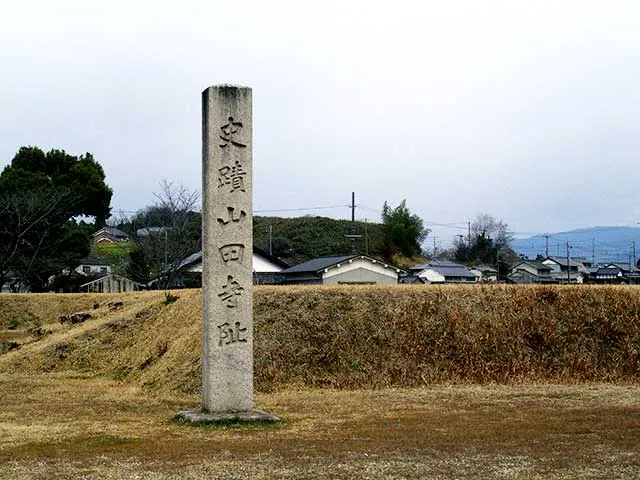
Located in the southern part of the Nara Basin, Asuka and Fujiwara were the two ancient capitals of the Japanese archipelago that marked the establishment of a centralised state system modelled after the Chinese codified law known as ritsuryō. Nineteen component parts, comprising palaces/government offices, Buddhist temples and mounded tombs, contain archaeological evidence of the Asuka Capital (588-694 CE) and the Fujiwara Capital (694-710 CE). The Asuka capital was established at the site of the Asuka-dera Temple, the first Buddhist temple in Japan. Together, the sites illustrate the introduction and consolidation of key elements of early centralized governance and influenced the later Japanese capitals of Nara and Kyoto.
Heritage at a glance
- First inscribed
- 2026
- UNESCO region
- Asia and the Pacific
- Selection criteria
- (ii)(iii)
- Property area (hectares)
- 137.99
Why this place matters
UNESCO’s assessment of its heritage significance, adapted in formatting from the source dataset.
Brief synthesis
The Ancient Capitals of Asuka and Fujiwara are a serial property of nineteen component parts that are associated with two consecutive early capitals on the Japanese archipelago established through interchanges with kingdoms in China and the Korean Peninsula. Located in the Nara Basin, these sites attest to the formative processes of the emergence and establishment of centralised state systems in East Asia, modelled on the Chinese ritsuryo system. The capitals of Asuka and Fujiwara influenced the construction and evolution of subsequent capitals in Japan, including the Nara Capital in the 8th century and the Heian Capital in Kyoto in the 9th century. The layout, design, technology, and planning of the two capitals were a result of a fusion between local traditions and adoption of culture and technology from other East Asian powers.
The nineteen component parts have been selected to represent three tangible and spatial dimensions of these capitals: palace/government office sites, Buddhist temple sites, and mounded tombs. The sites associated with the Asuka capital (588-694 CE) reflect the initial stages of the implementation of the centralised state and feature the concentration of political power in the palace and the gradual addition of governing facilities. The Asuka-dera Temple (component part 005) was the first Buddhist temple in the Japanese archipelago and marks the introduction of Buddhism. Private temples and new types of mounded tombs began to appear in areas under the influence of powerful clans.
The sites of the subsequent capital at Fujiwara (694-710 CE) represent the completion of this stage of central power development. The palace, including government offices, was positioned at the centre of the capital, with state temples and the systematic arrangement of tombs.
Criterion (ii):
The layout, design, technology, and planning of the palace/government office sites, Buddhist temple sites and mounded tombs of the Ancient Capitals of Asuka and Fujiwara represent an important interchange of human values with contemporary power centres in China and the Korean Peninsula, and the introduction of Buddhism to Japan. These early capitals exerted profound influences on the construction and evolution of capitals on the Japanese archipelago from the 8th century onwards.
Criterion (iii):
The sites associated with the Ancient Capitals of Asuka and Fujiwara form an important testimony to the cultural tradition of the formative processes of ancient capitals in East Asia based on centralised state systems through their locations, spatial layout and relationships and composition.
Integrity
The nineteen component parts that comprise the Ancient Capitals of Asuka and Fujiwara contain the necessary attributes needed to represent the formation and characteristics of these early centralised state systems in the Japanese archipelago. Most of the archaeological remains are located below the ground surface. They have been well-researched and are maintained in a stable condition. The boundaries are adequate, and the single encompassing buffer zone provides an added layer of protection.
Key pressures are actively managed.
Authenticity
The attributes of Outstanding Universal Value are archaeological sites that were covered below the ground surface after the Ancient Capitals of Asuka and Fujiwara were abandoned. Since that time, the land has been used for agriculture and the archaeological remains have a good state of conservation. The evidence of the spatial layout and configuration of the two ancient capitals is confirmed by archaeological excavations and historical literature. The sites are re-buried following archaeological excavations and above-ground representations using non-destructive methods and materials have been established to enable visualisation and interpretation.
Protection and management requirements
The Ancient Capitals of Asuka and Fujiwara are protected by law at the national and local levels. The component parts are protected either as Historic Site, Special Historic Site, or Place of Scenic Beauty under the Law for the Protection of Cultural Properties; or as Imperial Mausoleum under the National Property Act. Changes or developments within these areas are strictly regulated. Protection of the buffer zone is based on the Act on Special Measures Concerning the Preservation of Historic Landscape in Ancient Capitals and the Act on Special Measures Concerning the Preservation of Historic Landscape and Improvement of Living Environment in Asuka Village.
There are controls on the alteration of landforms, and on the height, colour, and design of new structures. The Scenic Zone is designated by the local government ordinance under the City Planning Act to ensure conservation of the surrounding environment. Parts of the buffer zone are directly managed by the national government as a national government park. Within the buffer zone, underground archaeological remains are protected under the Law for the Protection of Cultural Properties as “Land Known to Contain Buried Cultural Properties”.
There is a Comprehensive Preservation and Management Plan for the serial property and buffer zone. The Asuka-Fujiwara World Heritage Council provides a coordinated management mechanism, consisting of the Nara Prefecture, Kashihara City, Sakurai City, and Asuka Village. Each component part has an individual management plan. The component parts and buffer zone are subject to systematic monitoring and daily maintenance.
Places within this listing
This is a serial property with 19 components in the imported record.
View the component places
- Asuka Palace Site (1757-001)
- Kitora Mounded Tomb (1757-018)
- Fujiwara Palace Site (1757-013)
- Shobuike Mounded Tomb (1757-011)
- Ishibutai Mounded Tomb (1757-010)
- Nakaoyama Mounded Tomb (1757-017)
- Asuka Pond Garden Site (1757-002)
- Asuka Water Clock Site (1757-003)
- Asuka-dera Temple Site (1757-005)
- Yamada-dera Temple Site (1757-007)
- Kawara-dera Temple Site (1757-008)
- Daikandaiji Temple Site (1757-014)
- Sakafuneishi Ritual Site (1757-004)
- Hinokuma-dera Temple Site (1757-009)
- Kengoshizuka Mounded Tomb (1757-012)
- Motoyakushiji Temple Site (1757-015)
- Tachibana-dera Temple Site (1757-006)
- Takamatsuzuka Mounded Tomb (1757-019)
- Mounded Tomb of Emperor Temmu and Empress Jito (1757-016)